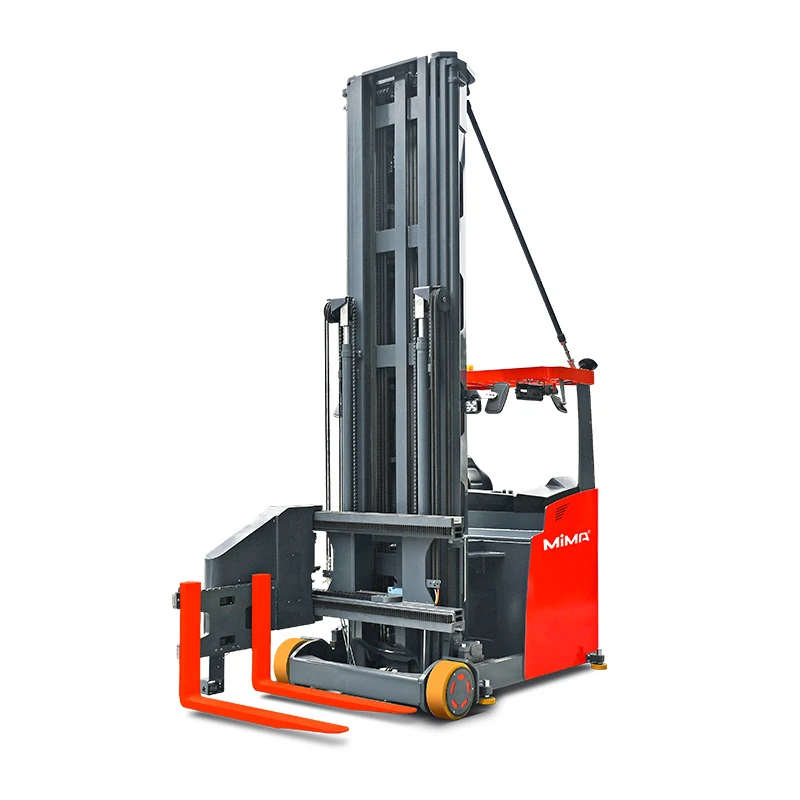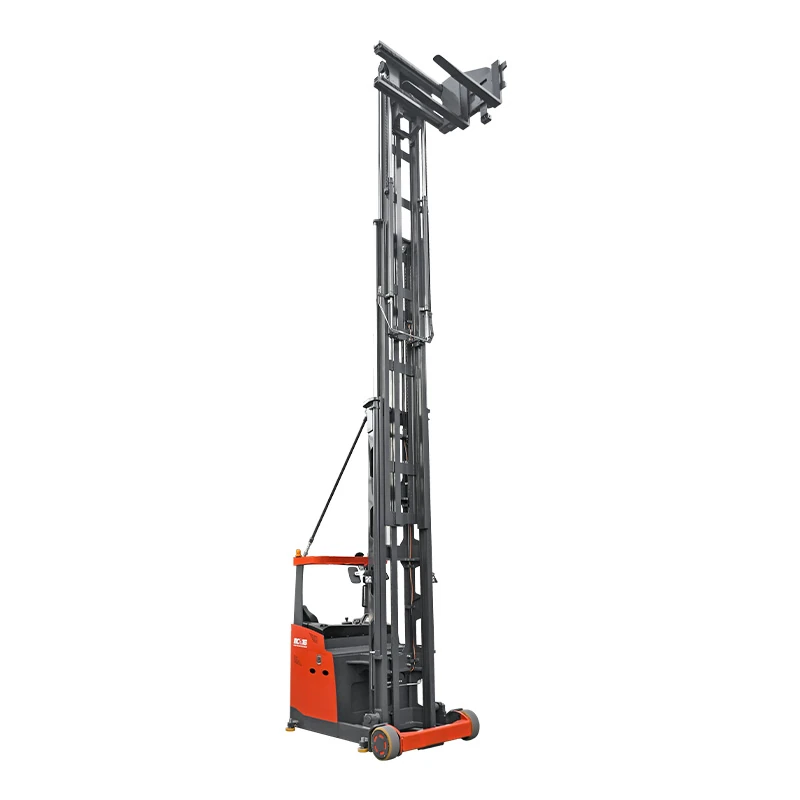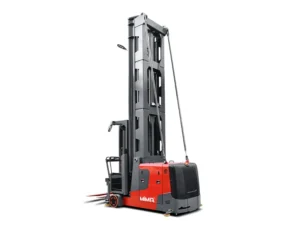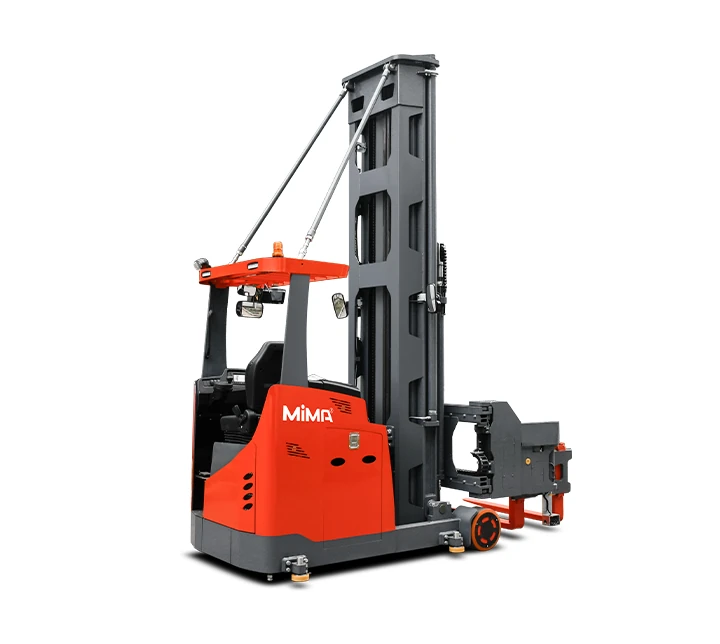
3-way Pallet Stacker

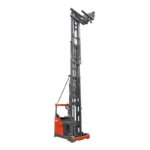
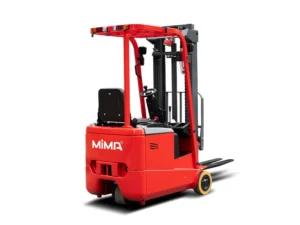
1.6T Seated Man-down Electric VNA Forklift MCA16

MCA16 is a 1.6-tonne seated man-down VNA forklift for full-pallet storage in very narrow aisles. Its electric three-way fork rotates, side-shifts and returns to centre for stacking on either side without turning the truck. Mechanical guide rail, permanent-magnetic and electromagnetic navigation configurations are available, with lift heights up to 12,000 mm.

Ideal For

  • High-density warehouses with stacking aisles from 1,600 mm
  • Medium- and high-level full-pallet storage and retrieval
  • Guided VNA installations requiring controlled aisle travel
View Datasheet
Product Features

Product Highlights

Key features designed to support safer, more efficient and more productive material handling.

Stack Without Turning

Stack Without Turning

The rotating and side-shifting fork handles pallets on either side without turning the truck.

Multiple Navigation Configurations

Multiple Navigation Configurations

Mechanical guide rail, permanent-magnetic and electromagnetic configurations suit different warehouse layouts.

High Residual Capacity

High Residual Capacity

Retains 1,600 kg at a 600 mm load centre up to 6,500 mm.

Product Data

Technical Specifications

Compare the available MCA16 configurations and discuss the required capacity, lift height and operating environment with our team.

Specification MCA16
Model MCA16
Operation Type Seated
Load Capacity 1600kg
Lift Height 3,000–12,000 mm
Mast Type Duplex / Triplex Full-free
Fork Outside Spread 265–765 mm
Aisle Width 1,600 mm mechanical / 1,650 mm magnetic
Battery Specification 48V/600Ah lead-acid standard
Product Overview

Product Details

Seated VNA Pallet Handling

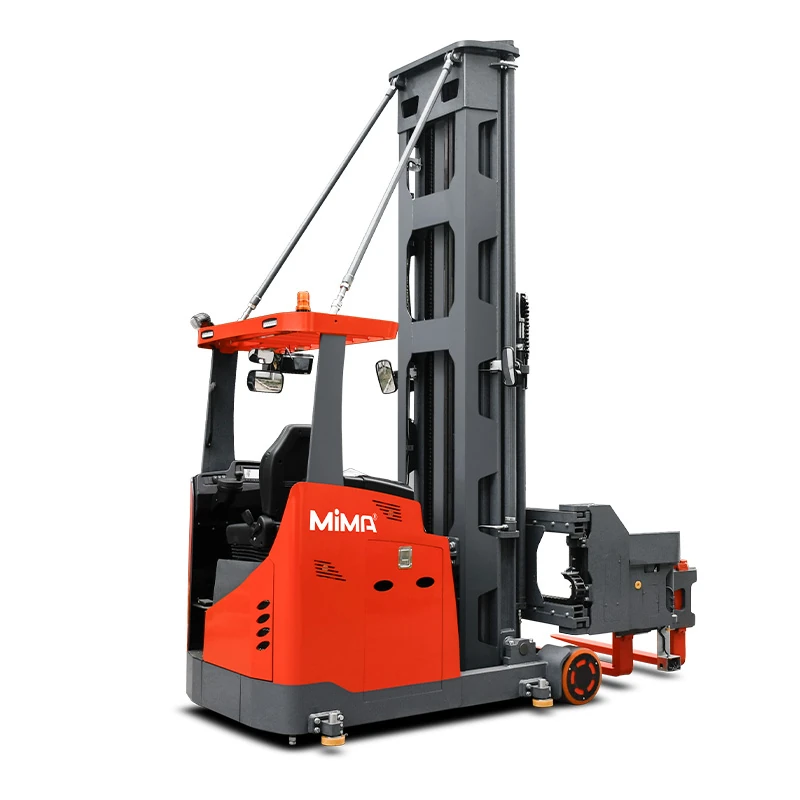
The MiMA MCA16 is a 1.6-tonne seated man-down VNA forklift for full-pallet handling in high-density warehouses. Duplex and triplex mast configurations provide lift heights from 3,000 to 12,000 mm.

Electric Three-Way Fork

The electric fork rotates and side-shifts to stack on either side without turning the truck. Linked fork movement and one-button centring simplify pallet positioning in narrow aisles.
Configurable Aisle Navigation

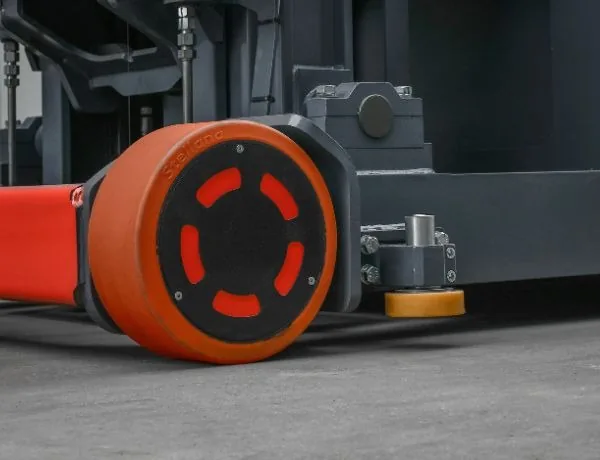
Mechanical guide rail is standard, with guided-aisle, low-rail, permanent-magnetic and electromagnetic navigation options available. Depending on the configuration, RFID or photoelectric mode switching and automatic aisle entry can also be provided.

Visibility and Aisle Assistance

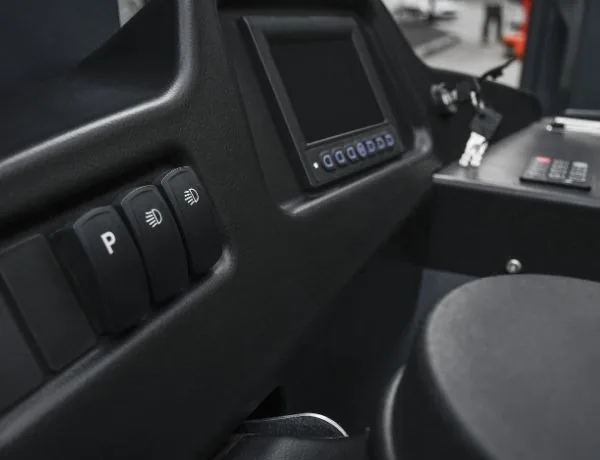
The full AC system combines Curtis control and electric power steering. A fork camera, cross laser and wheel-angle display support high-level handling. Optional functions include height preselection, end-of-aisle speed reduction, laser obstacle detection and automatic addressing.

Product Support

Frequently Asked Questions

Find answers to common questions about MCA16. For application-specific advice, contact MiMA Australia.
Q1: What type of VNA forklift is the MCA16?
The MCA16 is a seated man-down three-way pallet stacker. The operator remains at ground level while the forks handle full pallets in medium- and high-level racking.
Q2: What is the minimum stacking aisle width?
The minimum specified width is 1,600 mm for a 1,200 × 1,200 mm pallet with mechanical guide rails. A magnetic-guidance configuration requires approximately 1,650 mm. The final aisle width must also account for pallet overhang, load centre, rack clearance, lift height and floor condition.
Q3: Which navigation mode should be selected?
Mechanical guide rails are suitable for permanent VNA installations requiring reliable guidance and high travel efficiency. Surface-mounted magnetic strips require less construction work and may suit rented or existing warehouses. Buried magnetic strips remove surface obstacles, while electromagnetic guidance provides stable tracking through a powered wire loop. The choice should be made during the warehouse layout review.
Q4: What is the difference between mechanical guide mode and guided-aisle mode?
Standard mechanical guide rails physically keep the truck aligned, but the operator may still make minor steering corrections. Guided-aisle mode uses RFID or photoelectric detection to identify the aisle and switch the truck into controlled aisle operation, reducing the need for steering input.
Q5: Does the MCA16 need to turn inside the stacking aisle?
No. The fork rotates and side-shifts towards either side of the racking while the truck remains straight. Main-aisle space is still required to enter and leave the VNA aisle.
Q6: Can the MCA16 lift 1,600 kg to 12 metres?
No. The full 1,600 kg capacity is retained up to 6,500 mm at a 600 mm load centre. Capacity reduces progressively above this height and is 500 kg at 12,000 mm.
Q7: Does magnetic navigation include automatic aisle entry?
Automatic aisle entry is available with suitable permanent-magnetic or electromagnetic navigation configurations. Main-aisle clearance must account for whether aisle entry is manual or automatic. For a 1,200 × 1,200 mm pallet, the datasheet specifies a 400 mm main-aisle safety margin for mechanical or manual magnetic entry and 900 mm for automatic magnetic entry.
Q8: What does the optional aisle safety system provide?
The ASS package can apply end-of-aisle deceleration or stopping, area-specific speed limits and height restrictions. Laser obstacle detection and automatic addressing are separate configuration options.
Q9: What floor conditions are required?
VNA operation requires a level floor with sufficient flatness and load-bearing capacity. As a project guideline, the technical documentation references C30 concrete and a distributed floor capacity of at least 2.5 tonnes per square metre, subject to the selected truck and load. For lift heights of 9 metres or above, a floor flatness report should be supplied for technical review. The MCA16 is not permitted to operate on slopes.
Q10: What information is required before ordering?
Please provide the pallet dimensions, maximum load, load centre, top rack height, aisle and main-aisle widths, rack clearances, floor report, navigation preference, required throughput, battery preference and any height-preselection or aisle-safety requirements.